CHA is not the wax ritual. No deep cleaning. Ever.
If you have used hot-wax lubricants before, you will know the process: strip the chain completely, degrease, rinse, dry, then immerse. That process exists because wax only bonds to a perfectly clean metal surface. CHA works differently.
Graphite does not require a bare chain to adhere. It migrates progressively into the pin, roller, and bushing interfaces through chain articulation as you ride. Any oil or wax already in the chain does no harm: graphite takes its place as it wears away.
Deep cleaning works against you. Degreasing, solvents or washing the chain remove the graphite before it has had time to bond to the metal. A dry microfibre cloth is all CHA ever needs.
Graphite builds a thin layer. It never accumulates. Oil and wax build up and catch sand and dust until they turn into a grinding paste. Graphite stays a thin, dry film on the metal, so there is nothing for grit to stick to. The result is a smoother ride and a different sound: clean, not the muffled sound of a chain running through paste.
New chain: Apply CHA directly. No cleaning needed. Factory anti-corrosion coatings are thin and do not prevent graphite transfer. The graphite will work its way in from the first application.
Chain switching from oil: A wipe-down with a microfibre cloth to remove excess surface oil is enough. You do not need solvents, degreasers, or an ultrasonic bath. Residual oil inside the rollers is displaced progressively by graphite over the first few rides.
Chain switching from wax: The same. A dry microfibre cloth wipe is sufficient. Old wax residue does not block graphite penetration.
A worn chain will squeak with any lubricant. 0.75% wear is the maximum before the chain starts damaging cassette and chainrings, and many makers set the limit at 0.5% for 11 and 12-speed chains. Measure it with a chain checker, or ask your workshop. If it is at the limit, start CHA on a new chain.
The single most important detail: on a completely dry chain, you need more pressure and more turns than you would expect. Light contact transfers almost nothing. The capsule is not a touch-up tool. It is the primary lubricant, and the first application is where you load the chain.
This page shows you what a successful first application looks like, and how to get there with each formula.
Verify with your fingers, not your eyes
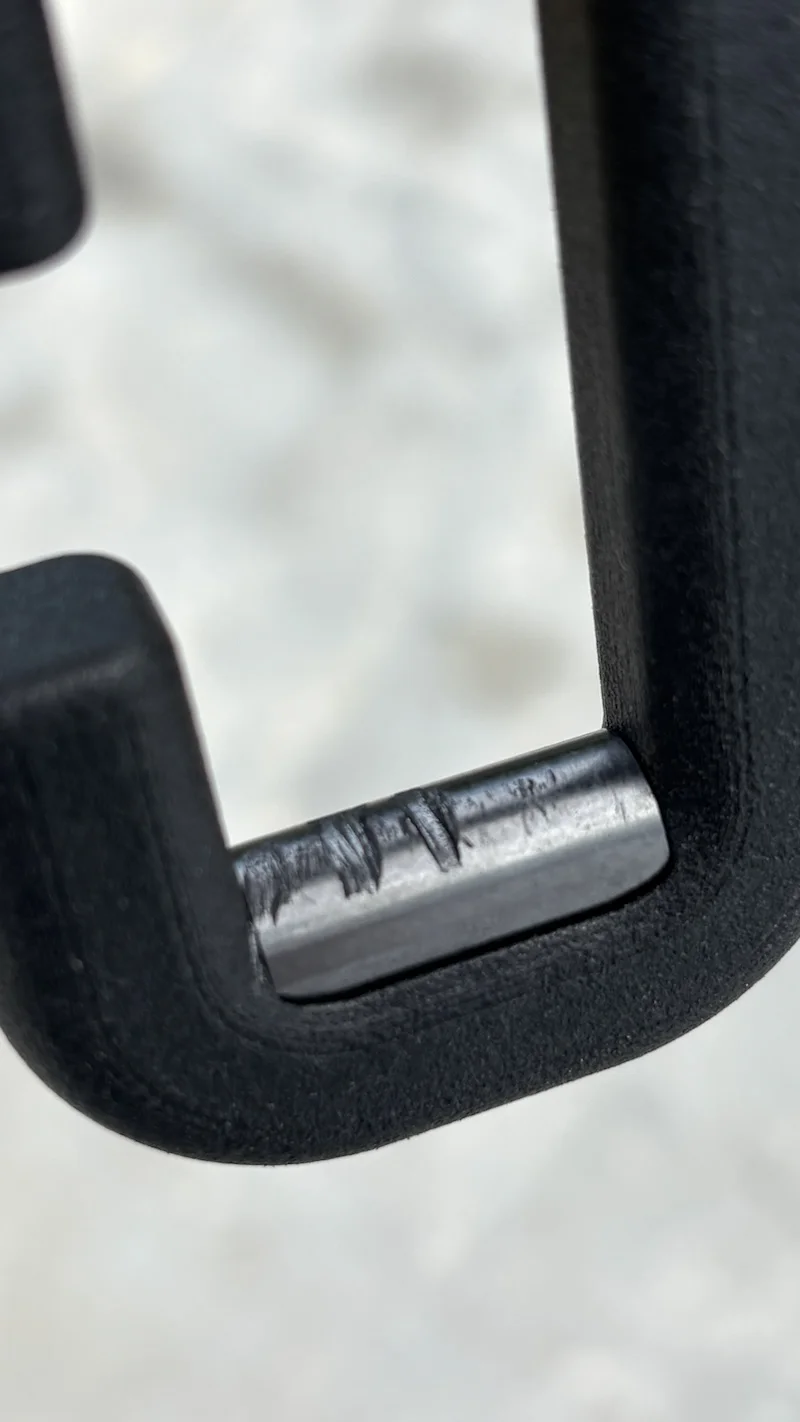
This is a photo of CHA Core after a first application on a new chain. Notice that the Core graphite capsule itself is visibly worn down from contact with the chain. That wear is graphite that has moved from the capsule onto the chain. Graphite is dark grey on dark grey metal. It does not coat, it does not shine, it does not look like anything.
Touch is the test, not sight. Run a clean cloth, a piece of paper, or your finger along the chain after applying. If grey transfers onto it, the chain has graphite on it. If nothing transfers, keep applying.
Cloth, paper, or finger comes away grey. That is the confirmation. The chain is protected. The graphite is where it needs to be.
Nothing transfers to the cloth. You have not applied enough. More pressure. More turns. Test again.
Three steps, in order
Skipping any of these is the single biggest cause of a noisy first ride. Do them all.
Press firmly. Not gently.
Place the open capsule against the lower run of the chain. Push the capsule into the chain with steady, firm pressure so the graphite tip is deforming slightly against the rollers. The contact patch matters more than anything else.
If you can lift the capsule away with no resistance, you are not pressing hard enough.
Backpedal slowly. Many turns.
With pressure held, rotate the cranks backwards. Slowly. Fast rotation gives the capsule no time to deposit material.
On a dry chain, you need significantly more turns than a top-up application. The drier the chain, the more you need to apply. A factory-new chain has very little on it, so more graphite must transfer before the chain is loaded. The exact number of turns depends on which formula you are using. See the next section.
Touch test, then ride
Run a clean cloth, a piece of paper, or your finger along the chain. If grey transfers, the chain is loaded. If nothing transfers, you have not applied enough. Press harder, add more turns, test again.
Then ride. The first 1 to 5 km is a break-in phase. The graphite migrates from the surface into the pin, roller, and bushing interfaces through chain articulation. The drivetrain settles in during this ride.
Core is harder. By design.
Each formula is engineered for a different job, and the hardness reflects that. Adjust your first-application effort accordingly.
Core is the base of the system. Its proprietary graphite formula is the firmest of the three because it is designed to last the longest on the chain.
That hardness is a feature. It also means Core needs the most pressure and the most turns on a dry chain. Do not be shy with it.
30+ slow backpedal rotations, firm pressure
Storm is formulated to be hydrophobic and to deposit faster. It is softer than Core, so it transfers to the chain with less pressure and fewer turns.
Storm goes on top of Core. It is a wet-conditions add-on, not a replacement.
15-20 slow backpedal rotations
Trail is engineered for grit-heavy conditions. Like Storm, it is softer than Core and transfers to the chain quickly.
Trail goes underneath Core. Apply Trail first, then Core on top, before mud rides.
15-20 slow backpedal rotations
The break-in ride
Graphite reaches its working position through chain articulation. The first ride is part of the application, not separate from it.
The break-in distance. During this ride, graphite migrates from surface deposits into the pin, roller, and bushing interfaces where it does its work.
Once. Reapply CHA Core once after the first break-in ride. This locks in full coverage. From then on, apply CHA before every ride.
A clean sound, not a paste sound
Your chain will sound different on CHA. That is the thin graphite layer doing its job, not a lack of lubrication. A squeak is the one sound that is not normal.
Muffled
A thick film dampens the sound, and it also holds sand and dust. Over the kilometres that film becomes a grinding paste that wears the chain, the cassette and the chainrings.
Clean and smooth
A thin, dry graphite layer with nothing for grit to stick to. The drivetrain sounds crisper and runs smoother. If you hear a high-pitched squeak, the chain needs more graphite: see below.
Less work than you are used to
Graphite bonds to the metal over time. Every rule below protects that bond.
A short top-up with firm pressure keeps the layer complete.
Wipe off surface dust. That is the only cleaning the chain needs.
Wipe the chain dry when you get home, before storing the bike. Top up Core before the next ride, with Storm on top if it will be wet.
Keep the water off the drivetrain when you can. If the chain gets wet from washing or rain, wipe it with a dry cloth before storing the bike, and again before applying CHA.
They strip the graphite before it has time to bond, and you start again from a dry chain.
Water on the chain washes the layer away. A wet, unlubricated chain squeaks almost straight away.
Four causes, in order
A squeak means metal is touching metal somewhere. Work down the list.
Do the touch test. If little grey transfers, press harder and add more slow turns until it does.
Degreasing, rinsing or a pressure washer removed the layer. Reload it like a first application, and use a dry cloth from now on.
Apply on the rollers and on both side plates, so graphite reaches every contact point.
Check the wear. At 0.75% (0.5% on 11 and 12-speed) the play at the pins makes a chain squeak with any lubricant. Replace it.